Back to articles

How Law Firms Use BeSavvy to Teach Crucial Due Diligence Skills and Save 127 Hours of Senior Lawyers’ Time

19 January 2026
How Law Firms Use BeSavvy to Teach Crucial Due Diligence Skills and Save 127 Hours of Senior Lawyers’ Time

1. Introduction

A law firm’s workflow for preparing a client for a transaction involves requesting specific documents, analysing them, and using the insights to move the transaction forward. Since the analysis process is uniquely developed in-house, external solutions can’t be used to streamline this task. For junior lawyers, mastering this process quickly and reliably is essential.

BeSavvy transforms this challenge by creating simulators tailored to the firm's existing documents and processes.

This ensures every junior lawyer has a personalised training system. By eliminating the gaps between learning, practising, and receiving feedback, BeSavvy accelerates skill acquisition, making it up to three times faster.

2. The Challenge: training juniors' practical skills without the direct involvement of seniors

caption_goes_here

The law firm had a key challenge: training junior lawyers like Sarah, a recent graduate eager to prove herself, to master their unique transaction preparation process.

The workflow involved requesting and analysing specific client documents, then applying those insights to facilitate transactions. However, the firm’s in-house Due Diligence system was unlike anything Sarah had encountered in law school or internships.

Sarah found herself overwhelmed. Without prior experience with the bespoke system and minimal hands-on practice, she struggled to keep up. Training sessions were sporadic, and feedback was often delayed, leaving her uncertain about her progress. Meanwhile, senior lawyers, already stretched thin with client work, couldn’t dedicate enough time to guide her through the process.

In the meantime, approachability and high-quality supervision are key to attracting top-talent, according to Legal 500. So no law firm should neglect it!

This situation wasn’t unique to Sarah. Other junior lawyers at the firm faced similar hurdles, resulting in:

  • Delayed onboarding and reduced efficiency.
  • Uneven training outcomes, with some associates taking much longer to get up to speed.
  • Missed opportunities for juniors to contribute meaningfully during critical transactions.

The firm needed a solution that could give juniors like Sarah a clear, hands-on training experience tailored to their unique processes — one that would empower them to succeed faster and more confidently.

BTW. Good formal training program for attorneys is one of the criteria that Yale University recommends future lawyers to use when choosing their place of work!

3. The Solution: using simulators in law firm training

To address the training challenge, BeSavvy worked closely with the law firm to create a tailored solution. By developing a customised simulator that mirrored the firm's unique document analysis process, BeSavvy was able to provide an effective and efficient way for junior lawyers to gain the skills they needed. Here's how the implementation unfolded:
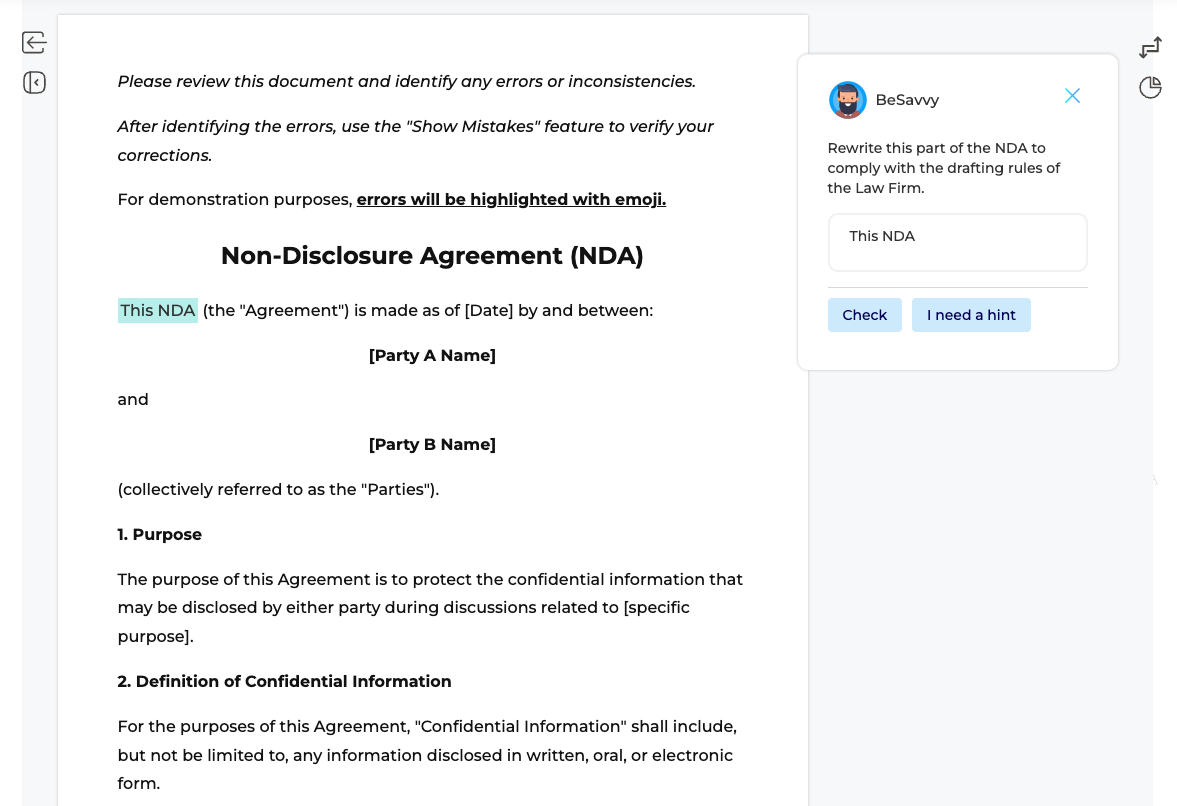
Specific Features and Modules Used

caption_goes_here

1. Document Analysis Simulators

BeSavvy developed simulators built around real, anonymised documents from previous transactions. This ensured junior lawyers could train with realistic, relevant materials.

2. Step-by-Step Guidance

Simulators included:

  • Guided steps for document requests, analysis, and application: This provided a clear structure for juniors to follow, ensuring they understood each stage of the process.
  • Training for key skills: The simulator allowed trainees to practice analysing documents, identifying key information, and generating insights.
  • Automated feedback: BeSavvy’s AI system provided instant, actionable feedback on every action taken by the junior lawyer, helping them improve their skills in real-time.

3. Personalised Training Paths

The simulator adapted to each junior’s performance, providing additional practice or guidance where needed. This ensured that every trainee progressed at their own pace, mastering the required skills with confidence.

Timeline for Implementation

The implementation was completed in just six weeks, ensuring the firm could quickly integrate the solution and begin training junior lawyers. The timeline was broken down as follows:

Week 1–2: Consultation and Workflow Analysis
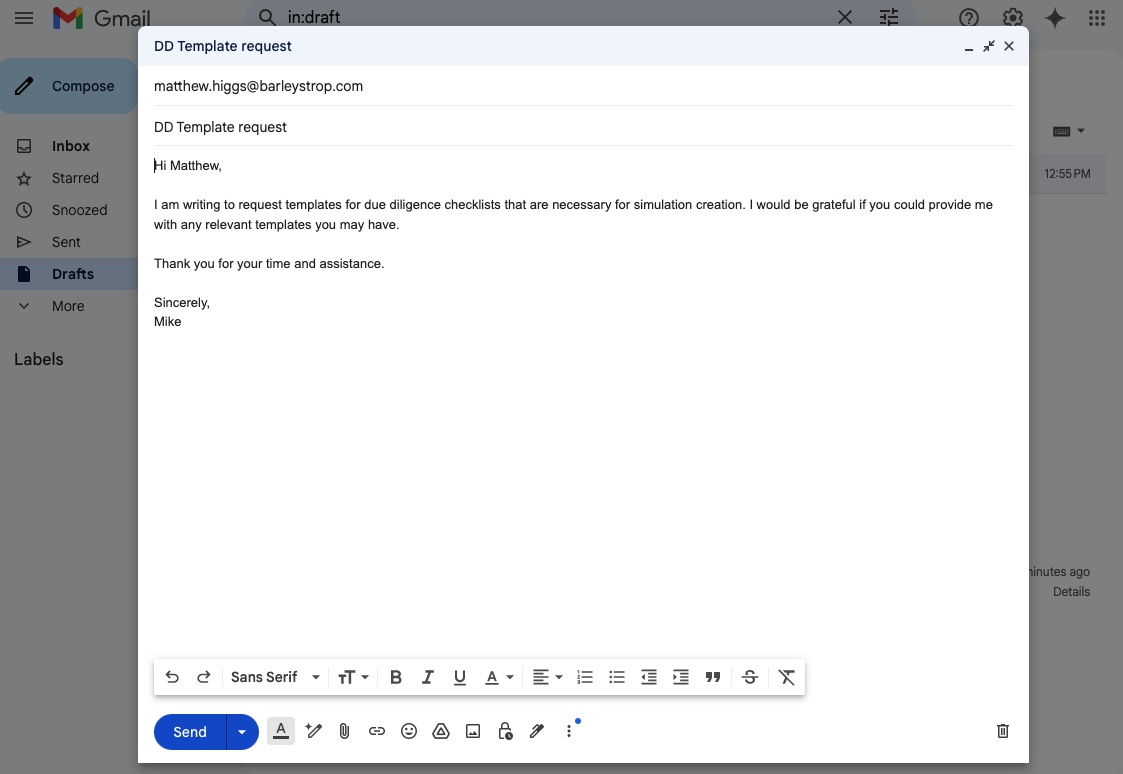
  • BeSavvy conducted consultations with the firm to understand their document review workflow.
  • Using AI algorithms, BeSavvy extracted relevant information from the firm’s documents and began building the simulator around this knowledge, minimising the workload for the firm.

caption_goes_here

Week 3–4: Development and Testing

  • BeSavvy identified the key skills to be developed in each simulator and set clear goals.
  • The simulator's structure was developed, incorporating training loops designed to:
  1. Help the junior lawyer learn new skills.
  2. Provide opportunities for practice.
  3. Offer feedback to improve performance.
  4. Encourage reflection to integrate the skill into their overall skillset.
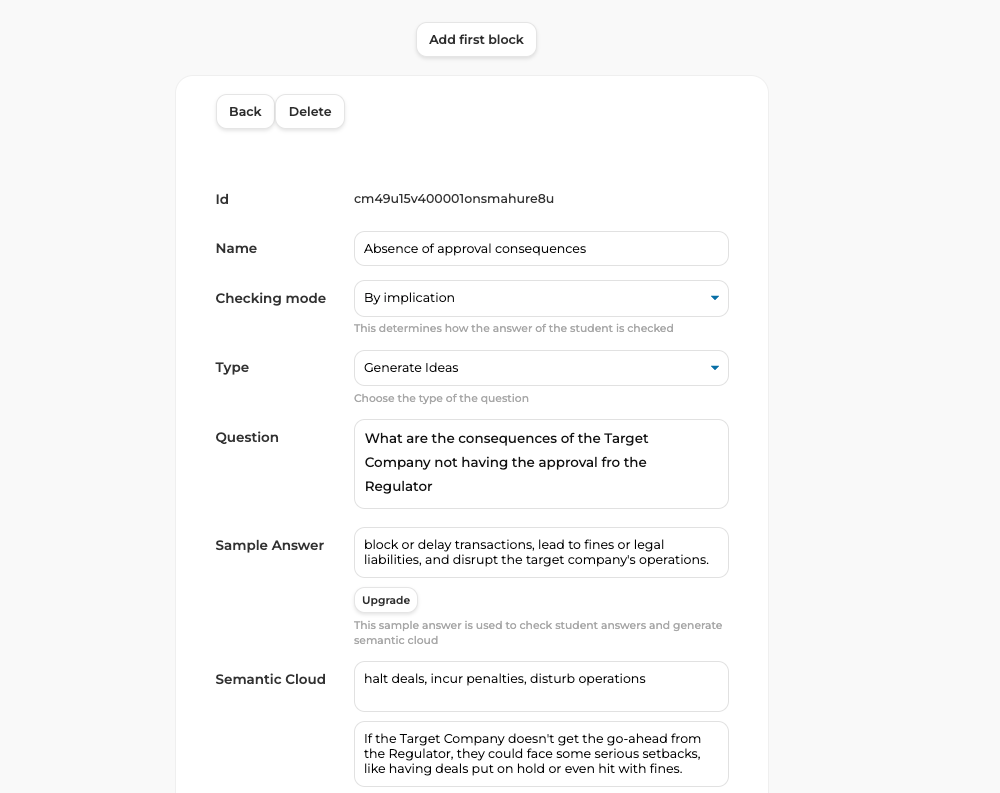
  • Additional components like explanation blocks, practice blocks, and reflection blocks were created.
  • BeSavvy tested and refined the simulator, including personalising the feedback and assessment algorithms.

Week 5: Feedback and Refinement

  • BeSavvy shipped the simulators to the client for senior lawyers to complete.
  • Feedback was collected from senior lawyers and analysed to improve the simulators and update the algorithms.
  • A production version of the simulators was then released based on this feedback.

caption_goes_here

Week 6: Deployment and Onboarding

  • The simulators were deployed, and junior lawyers were granted access to the training materials.
  • BeSavvy provided onboarding through an online webinar and ensured continuous support throughout the process.
  • BeSavvy monitored the juniors' learning activities and collected data to assess their progress, providing assistance if needed.

Number of Simulators

A total of 8 simulators were created to address the training needs of the junior lawyers. The breakdown of how this number was calculated is as follows:

1. Training Loops: Each simulator included 3 training loops, with each loop comprising up to 5 learning elements designed to:

  1. Teach a new skill.
  2. Offer practice for that skill.
  3. Provide feedback on practice.
  4. Help the trainee reflect and integrate the skill.

2. Skills Identified: After analysing the document review workflow, BeSavvy identified 22 key training elements. These were used to create 8 separate simulators that covered all necessary skills.

By combining customisation with a streamlined implementation process, BeSavvy helped the firm transform its training program, making it more efficient, engaging, and scalable.

Junior lawyers gained the confidence and competence they needed to excel in their roles—faster and with greater reliability.
Firms that want to capture best talent need to include a variety of opportunities to show their investment in new recruits, such as coaching services, professional development, career planning, CLE training options, and stress management workshops. Simulators can be one of them!

4. What we have built with BeSavvy, AI and simulators

Here are some key elements from the simulators we created:

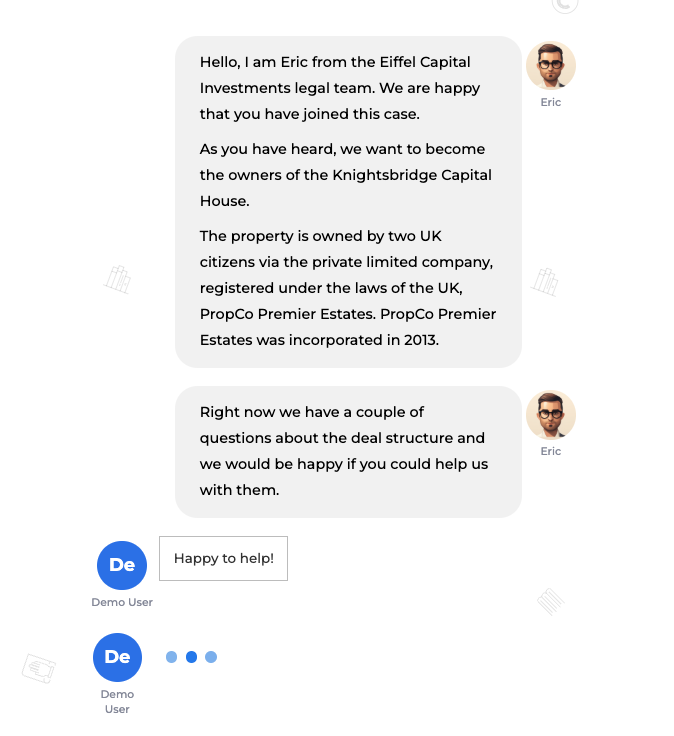
An Engaging Storyline to Boost Retention

To enhance memorability, we developed an engaging narrative with relatable characters.

Research by Peg Neuhauser shows that learning tied to a well-told story is remembered more accurately and for longer compared to facts and figures. This approach makes complex concepts easier to grasp and retain.

⬇️ Example: Interactive dialogues with different characters that immerse students in real-world scenarios.
caption_goes_here

Seamless Integration of Knowledge into Practice

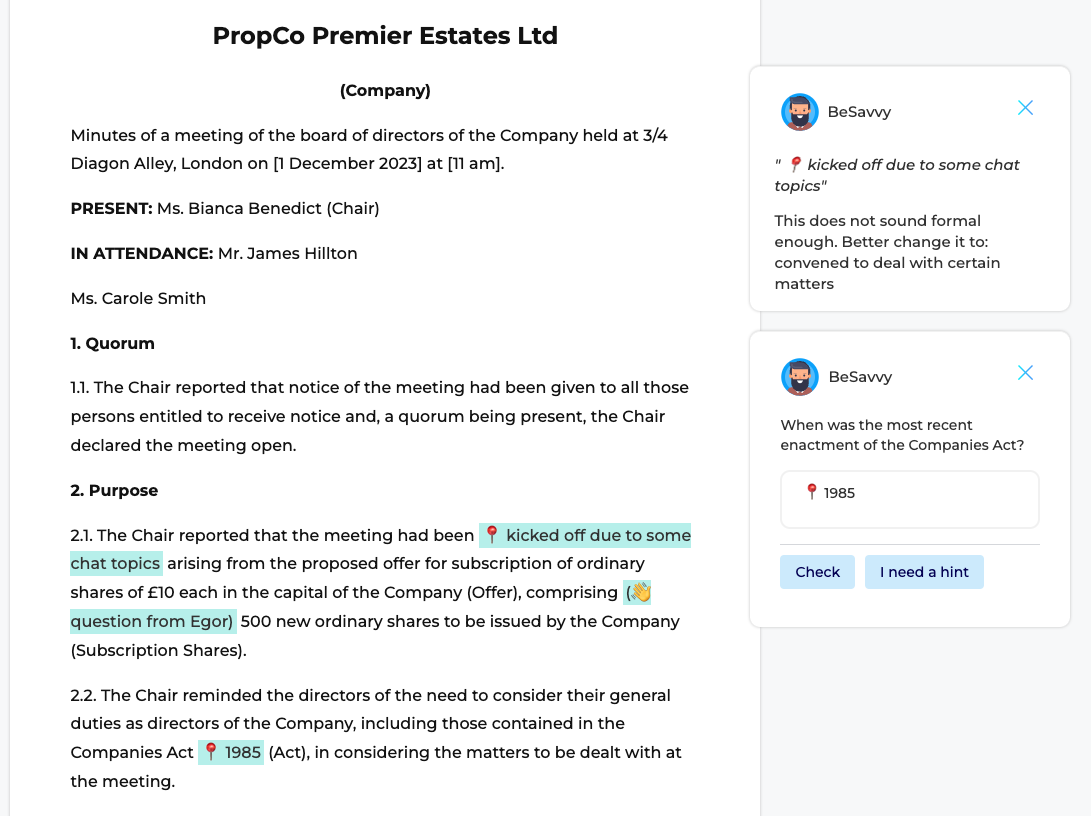
All new knowledge is applied directly within the context of documents, bridging the gap between theory and practice. Students dive into the documents immediately, learning as they go.

⬇️ Example: Built-in text editors for annotating, analysing, and applying knowledge directly within the simulator.
caption_goes_here

Realistic Scenarios That Demand Action

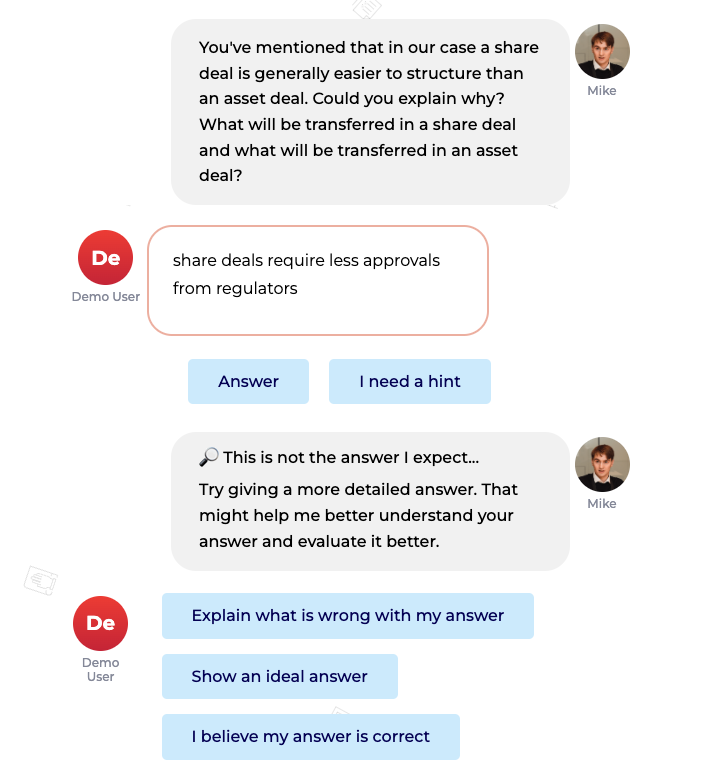
We designed scenarios where students encounter documents containing realistic challenges that require decisive action.

Unlike multiple-choice questions (MCQs), open-ended questions (OEQs), although traditionally avoided due to evaluation complexity (Taylor & Francis research), better mimic real-life situations, fostering deeper skill development. BeSavvy’s advanced AI algorithms ensure effective and scalable assessment of OEQs.

⬇️ Example: Simulators present nuanced situations that demand critical thinking and immediate responses.
caption_goes_here

By incorporating these elements, BeSavvy ensures that trainees are engaged, applying their skills practically, and being evaluated accurately in a realistic and interactive environment.

5. Results: how simulators increase engagement and skill adoption

The implementation of BeSavvy’s tailored simulator had a significant impact on the firm’s training program. Here are the key outcomes:
caption_goes_here

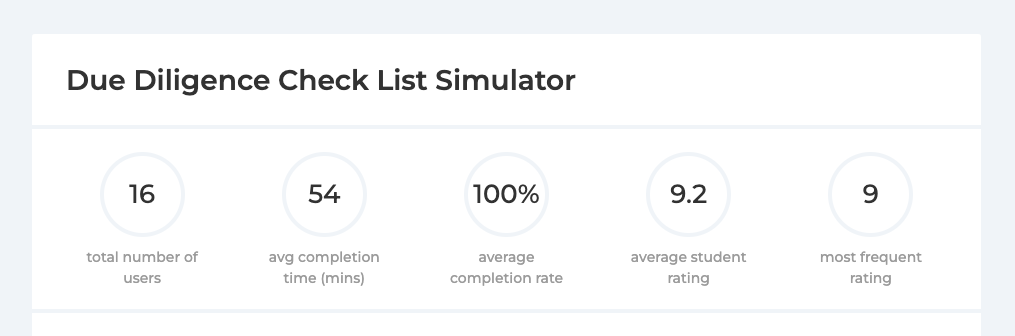
  1. Completion Rate. All 16 junior lawyers successfully completed all 8 simulators, demonstrating full engagement with the training program. This high completion rate highlights the effectiveness of the simulators in keeping the juniors focused and committed.
  2. Net Promoter Score (NPS). The average NPS for all simulators was 9.3. First simulators showed lower NPS of 7 which can be explained by the juniors’ fear of making mistakes and familiarisation with the new format.** This improvement reflects the growing satisfaction of the junior lawyers as they became more familiar with how to use the simulator effectively. Their increasing confidence with the system contributed to a higher overall rating.
  3. Time Efficiency. The average time to complete a simulator initially was 1 hour 23 minutes, but as the juniors became more accustomed to the system, the time decreased to 46 minutes. This reduction in time demonstrates how quickly the juniors adapted to the training process, significantly improving efficiency.
  4. Skills Development Tracking. BeSavvy’s system effectively identified both the skills that were successfully developed and the areas where further assistance was required. For skills that still needed improvement, the system suggested mentor review sessions or focused training, ensuring that juniors received the support they needed to progress.
  5. Feedback from Junior Lawyers. The junior lawyers found the training experience to be engaging, unique and focused on practical application. They highlighted how the simulators helped them better understand how to perform real-world tasks and apply their learning directly to their work, making the experience feel highly relevant and impactful. **Links and visuals: Quote?
  6. Cost Savings. A personalised training approach similar to BeSavvy’s would have required 128 hours of senior lawyer time, resulting in an estimated cost of $102,400 USD for the law firm. This significant saving underscores the efficiency of BeSavvy’s automated, personalised training system, which delivers high-quality results at a fraction of the cost.

In summary, BeSavvy’s tailored training simulators delivered impressive results, including improved efficiency, enhanced skills development, and substantial cost savings for the firm. Junior lawyers gained practical skills quickly and confidently, with valuable feedback on their progress.

This creates an environment that Yale describes as a great place to work: "Associates are more likely to thrive in settings where expectations are clearly defined, performance is periodically evaluated, and regular feedback is provided"

6. Key Takeaways

This use case illustrates the powerful impact BeSavvy’s training simulators can have on a law firm’s onboarding and development processes. Key takeaways include:

  1. Personalised, Scalable Training. BeSavvy’s customised simulators offer a personalised learning experience, adapting to the individual needs of junior lawyers. This scalability ensures that firms can efficiently train large teams while addressing specific skill gaps for each individual, increasing overall effectiveness.
  2. Significant Time and Cost Savings. By automating and streamlining the training process, BeSavvy reduces the need for extensive senior lawyer involvement, saving both time and money. For this law firm, the cost of running a similar personalised training program manually would have been over $102,000 USD. (127 hours / 800 USD an hour) BeSavvy provides a highly cost-effective alternative without compromising on quality.
  3. Engaging and Practical Learning Experience. The interactive and hands-on nature of the simulators ensures that junior lawyers not only learn but also apply their skills in realistic scenarios. Feedback from the juniors highlighted how engaging and relevant the training was, enhancing their overall experience and improving their confidence in performing key tasks.
  4. Continuous Improvement and Data-Driven Insights. BeSavvy’s system tracks and analyses each lawyer’s progress, identifying areas for improvement and offering targeted support. This data-driven approach allows firms to continuously refine their training programs and offer additional mentorship where needed.

Application to Other Clients

This solution can be applied to other law firms or businesses facing similar challenges of quickly training new hires or improving specific skills within their teams. Whether it’s document review, contract negotiation, or any other critical process, BeSavvy’s training simulators can be customised to mirror existing workflows, making training more efficient, engaging, and cost-effective. Other organisations, such as compliance departments or corporate legal teams, could also benefit from BeSavvy’s personalised, scalable learning system to train staff and improve operational efficiency.