What is a Playbook?
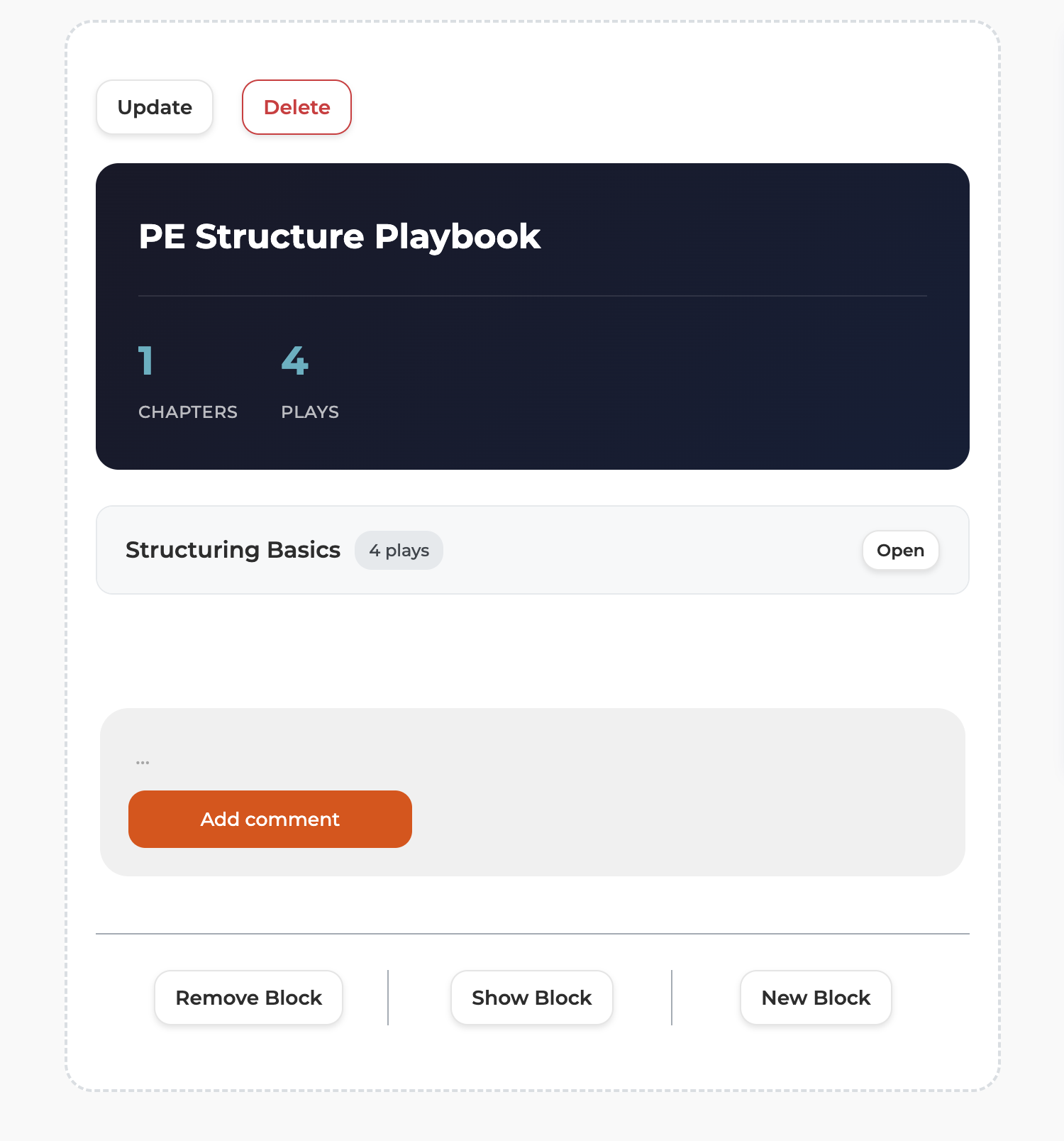
A Playbook is best understood as the simulation’s knowledge base.
It contains curated legal and practical know-how that BeSavvy can use to support the learner during tasks, for example:
- Hints and guidance (what to look at next, what framework to apply, what questions to ask)
- Explanations (what something means, why it matters, how it works in context)
- Feedback (what is missing, what is incorrect, what is good but incomplete, and how to improve)
- Assessment logic (what “good” looks like, how to prioritise issues, what is market-standard vs aggressive)
In other words, tasks define what the learner must do; the Playbook defines the knowledge and reasoning framework the simulation should use to help and evaluate the learner.
How Playbooks are organised?
Playbooks → Chapters → Plays → Insights
Playbooks are modular, not one long document. They are organised as a hierarchy so you can reuse and attach the right knowledge in the right place:
- Playbook: the overall knowledge base for a subject area (e.g., Due Diligence, Drafting, Negotiation).
- Chapters: high-level sections that group related topics (e.g., “Contract Risks”, “Regulatory”, “IP”).
- Plays: focused units within a chapter, each covering one specific topic (e.g., “Change of Control”, “IP Ownership”).
- Insights: the individual multi-level knowledge items inside a Play (principle → rationale → application → pitfalls).
This structure makes knowledge easier to maintain and lets you attach specific Plays (and their Insights) to any task in a simulation.
What are Insights?
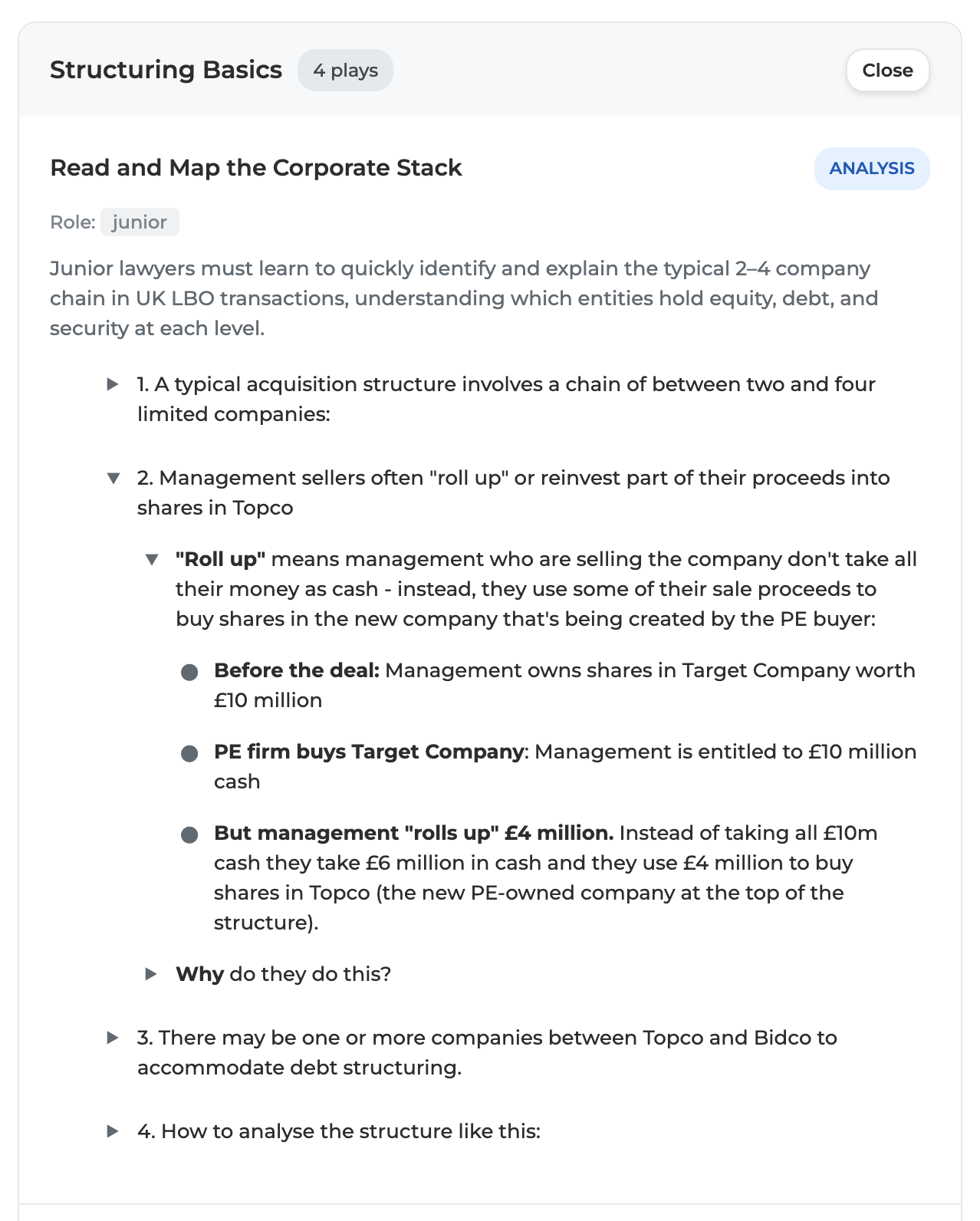
Inside a Playbook, the core building blocks are Insights.
An Insight is a piece of structured knowledge designed to be multi-level. That means it can capture:
- a core principle (the baseline rule or concept),
- the rationale (why it exists and what risk it addresses),
- practical application (how it shows up in real matters),
- drafting / negotiation implications (how lawyers respond),
- common pitfalls (how juniors typically misinterpret or miss it).
This multi-level structure is what allows the simulator to provide support at the right depth – basic explanations for beginners, deeper nuance for more advanced learners, and practical “what to do next” guidance when someone gets stuck.
When building a simulation, you can attach an unlimited number of Plays to tasks, explanations, mentor guidance, and feedback points – so the simulator knows exactly what knowledge to rely on in each context.
The two roles a Playbook plays
A Playbook serves two distinct roles inside BeSavvy. Understanding this distinction will help you build Playbooks that are both usable and scalable.
1) A Playbook guides the simulation (teaching and assessment)
First, a Playbook acts as the simulation’s internal reference framework. It informs how BeSavvy should support the learner and evaluate performance. When the learner submits work or asks for help, the simulator can draw on the relevant Plays and Insights to generate:
- targeted hints and next-step prompts,
- consistent explanations aligned with your approach,
- feedback tied to the underlying principle (not generic commentary),
- structured assessment against clear criteria (accuracy, prioritisation, commercial judgement, drafting discipline).
This is what makes feedback and scoring feel credible and repeatable across users, cohorts, and simulations.
2) A Playbook is a user-facing data source (on-demand help during tasks)
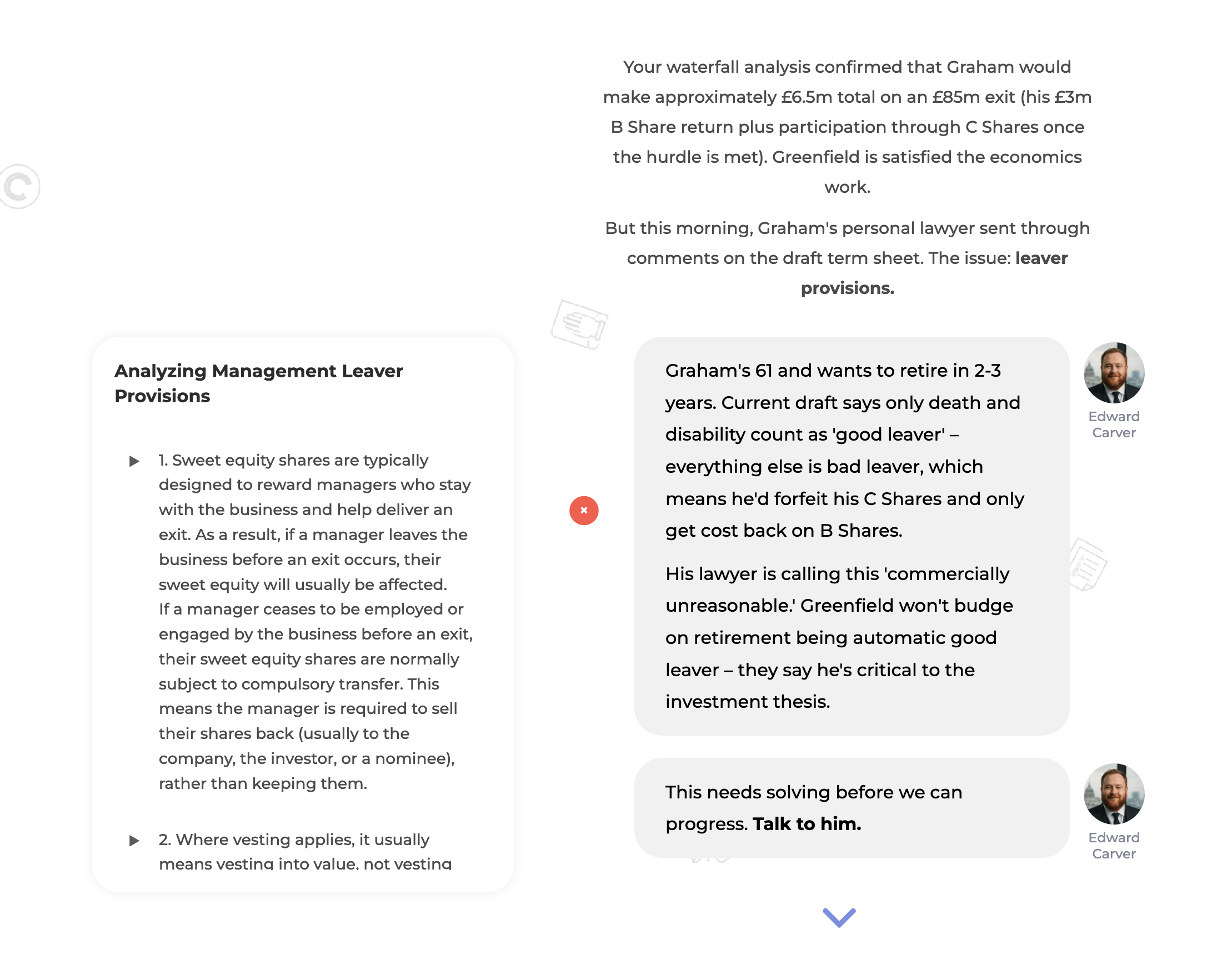
Second, the Playbook can be surfaced as an on-demand resource that users rely on while completing tasks. In practice, this means that when a user is stuck or uncertain, the simulator can provide help grounded in the Plays you attached, such as:
- a step-by-step reasoning framework (“how to analyse this clause”),
- checklists and issue-spotting prompts (“what to verify and why”),
- examples and guidance on how lawyers typically express a position,
- common pitfalls and how to avoid them.
This turns the simulation into more than a test. It becomes a guided learning environment where users can pull the right knowledge at the point of need.
Why this structure matters
Without a Playbook, simulations often produce inconsistent guidance and generic feedback.
With a Playbook, you get a repeatable, scalable system: the same Plays can power multiple simulations and provide reliable help to learners across different tasks.
As you grow your simulator library, Playbooks ensure your methodology stays consistent and your learner support remains high quality.
And you get a special layer between the simulation and the LLM knowledge providing the quality you need and expect.